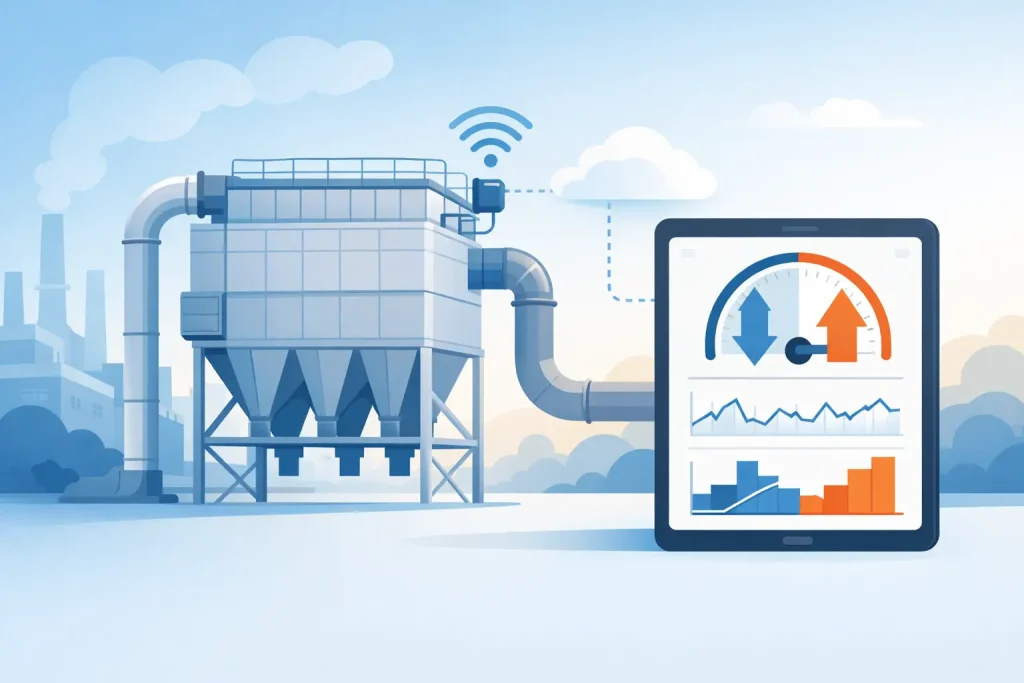
A baghouse can appear to be operating normally while filter resistance, pulse-cleaning performance, or airflow is moving toward a costly failure. The fan is still running, material is still moving, and production may not yet see a problem. Baghouse differential pressure monitoring IoT changes that position by turning a critical operating value into a live, traceable maintenance and compliance signal.
For plant managers, EHS leaders, and maintenance teams, this is not simply a dashboard project. Differential pressure data helps establish whether a dust collector is protecting process equipment, maintaining capture at hoods and pickup points, and operating within the conditions intended during design and testing and commissioning. Used correctly, it supports planned intervention before high pressure drop causes lost airflow, excessive fan energy, dust escape, or unplanned shutdown.
Why Differential Pressure Deserves Continuous Attention
Differential pressure, often called delta P or DP, is the pressure difference between the dirty-air and clean-air sides of a baghouse. As dust accumulates on filter bags or cartridges, resistance to airflow increases. The pulse-jet cleaning system periodically removes part of that dust cake, allowing the collector to return to an acceptable operating range.
The key word is acceptable. A low DP is not automatically good, and a high DP is not automatically evidence that the filters need replacement. Filter media needs a controlled dust cake to achieve effective filtration. However, an upward trend beyond the established normal range can indicate blinding, moisture-related plugging, inadequate pulse cleaning, a failed solenoid valve, insufficient compressed air, or an undersized collector operating beyond its intended air-to-cloth ratio.
Conversely, unexpectedly low DP can indicate torn bags, poor sealing, an open access door, bypass leakage, or a process airflow condition that has fallen below design volume. In a facility controlling combustible dust, process dust, metal fines, food ingredients, or animal feed, each of these conditions deserves investigation. DP must be read in context with fan status, airflow demand, pulse-cleaning activity, hopper discharge, and process operating conditions.
What Baghouse Differential Pressure Monitoring IoT Adds
A conventional pressure gauge gives a technician a reading at the moment of inspection. An IoT monitoring arrangement captures readings continuously or at scheduled intervals and sends them to a secure online platform, local control system, or both. The practical value is the trend, not merely the latest number.
A properly engineered installation commonly includes a differential pressure transmitter connected to clean- and dirty-side sensing points, with isolation valves and suitable tubing arrangements. The signal can be integrated with the pulse-jet controller, fan motor status, compressed-air pressure, hopper level devices, temperature inputs, and alarms. This provides a clearer operational record than a single analog gauge mounted on the collector.
For example, a gradual DP rise over several shifts while pulse frequency increases may point to filter blinding or ineffective cleaning. A sharp DP drop immediately after a maintenance event may justify an inspection for bag damage, poor cage installation, or access-door leakage. If DP rises only during a particular product run, the root cause may be material characteristics, moisture, or a change in production loading rather than a general collector fault.
The system should therefore be configured around operating decisions. It should tell responsible personnel when the collector has moved outside its known acceptable band, how fast the condition is changing, and whether associated equipment signals support the likely diagnosis.
Alerts Need Engineering Limits, Not Generic Numbers
There is no universal high-DP alarm setpoint for every baghouse. The appropriate range depends on filter media, collector design, fan curve, dust loading, cleaning method, process temperature, duct layout, and required capture performance. Copying a threshold from another facility can create nuisance alarms or, worse, normalize a condition that is reducing suction at critical pickup points.
A sound approach starts with a commissioning baseline. Record DP during stable operation after new filters have been conditioned and the system has reached normal process loading. Confirm airflow and hood performance where applicable, document pulse pressure and timing, and retain the values with the collector’s maintenance record.
From there, establish several practical alarm states: a caution point for a developing trend, a high alarm requiring investigation, and a critical limit that triggers defined escalation. Rate of change matters as much as the limit. A collector rising slowly over months requires a different response from one that rises rapidly over two hours.
From Data to Preventive Maintenance Action
IoT data only produces value when it leads to disciplined action. Maintenance teams should assign responsibility for alarm review, inspection, corrective work, and closeout documentation. The monitoring platform can support this process, but it cannot replace field verification.
When high DP is reported, technicians should first confirm the reading. Check sensing lines for plugging, water accumulation, loose connections, or damage. Then inspect the pulse-cleaning system: compressed-air pressure, receiver tank condition, diaphragms, solenoid operation, timer settings, and actual pulse response. A collector may show a high reading because it is not receiving sufficient cleaning energy, not because every bag has reached end of life.
If the cleaning system is operating correctly, inspect the dust characteristics and filter condition. Fine hygroscopic dust, oil mist contamination, elevated moisture, and process upsets can blind media quickly. Evaluate hopper evacuation as well. A full hopper can disturb dust flow and create conditions that are incorrectly attributed to the filter section.
For low DP alarms, check for leaks and loss of capture. Examine doors, gaskets, filter seating, tube-sheet integrity, and outlet plenum conditions. Review fan speed, damper position, duct blockage, and whether process equipment is actually operating. Where emissions performance is a concern, the response may include field auditing, airflow measurement, internal inspection, and stack sampling according to the facility’s permit and compliance program.
Compliance Evidence Requires More Than a Dashboard
Online DP monitoring is valuable compliance support, but it is not a substitute for required emissions testing, stack sampling, inspection records, or permit-specific reporting. It does not directly measure particulate concentration at the stack. Its role is to demonstrate that a key control device operating parameter has been continuously observed and managed.
That distinction matters during audits and investigations. A well-maintained record can show normal operating ranges, alarm events, response times, corrective actions, and verification after repair. It can also help an EHS or ESG team connect equipment reliability with a broader air-quality management program.
For facilities subject to occupational exposure requirements, DP trends can also support the assessment of local exhaust ventilation performance. If a collector’s resistance rises and hood capture deteriorates, workers may be exposed before a visible dust issue is recognized. Monitoring should be paired with periodic system audits, airflow checks, and operator training rather than treated as an isolated digital control.
Selecting the Right Monitoring Scope
The right scope depends on the collector’s criticality and the consequences of failure. A small noncritical collector may only require local indication and a simple alarm. A central baghouse serving multiple production lines, a high-dust process, or a permit-sensitive emission source normally justifies remote visibility, historical trends, escalation alerts, and integration with maintenance planning.
Before installation, verify that pressure taps are positioned to represent the actual dirty and clean plenums. Specify transmitters with a suitable range and accuracy for the expected DP. Protect wiring and enclosures for the site environment, especially where heat, vibration, washdown, corrosive vapor, or hazardous dust may be present. Cybersecurity, user access levels, data retention, and communication reliability should be included in the project scope, not left as afterthoughts.
Master Jaya Group treats performance monitoring as part of a full lifecycle air pollution control program: engineered system design, fabrication, installation, testing and commissioning, auditing, servicing, spare parts support, and ongoing operating visibility. This approach is particularly useful when the monitoring data must be interpreted against the actual collector design and process duty.
A baghouse is most dependable when its warning signs are visible before they become production interruptions. Establish a reliable DP baseline, connect the reading to the equipment conditions that influence it, and give your team a clear response procedure. That is how monitoring becomes a practical control measure for cleaner air, steadier operations, and defensible compliance records.