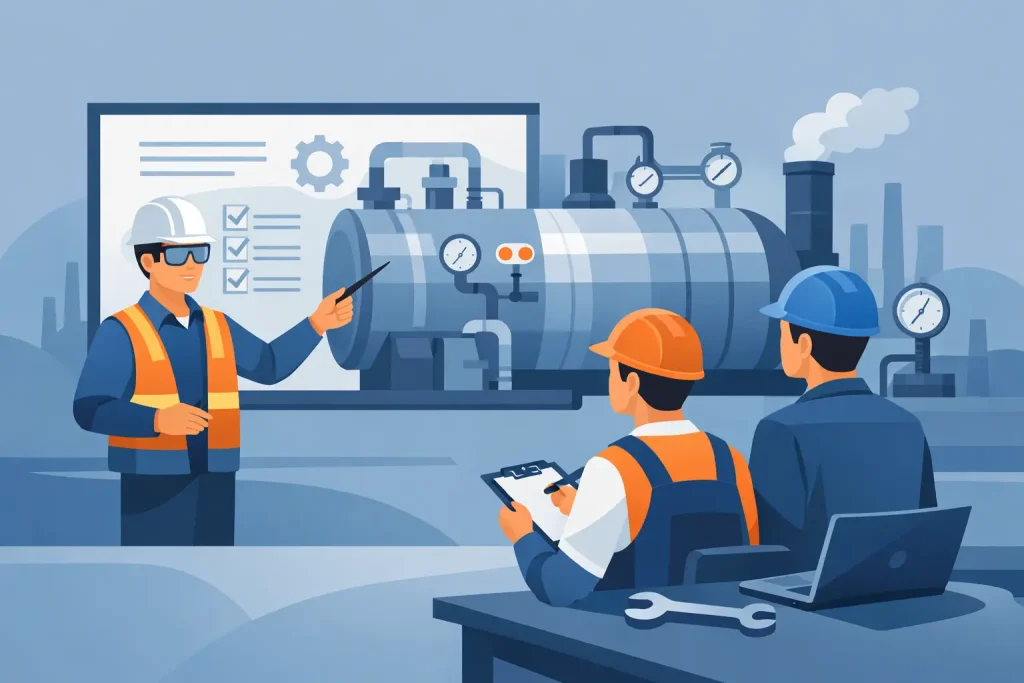
A boiler can pass a routine shift check and still be one upset condition away from a reportable emissions problem. That is why CePBFO training for boiler operators matters far beyond course completion. In regulated facilities, the role connects combustion control, air pollution performance, fuel handling, recordkeeping, and defensible compliance under Malaysia’s Clean Air Regulations 2014.
For plant managers, EHS leaders, and operations teams, the issue is not simply whether an operator can keep steam available. The real question is whether the person in charge can run the boiler system in a way that holds emissions within limits, responds correctly to abnormal conditions, and supports the documentation expected during audits, inspections, and DOE review. Competency closes that gap.
What CePBFO training is designed to achieve
CePBFO training is intended to prepare personnel for the responsibilities of a Certified Environmental Professional in the Boiler Fuel Burning Operation discipline. In practical terms, that means building the knowledge base and operating judgment required to manage fuel burning equipment with compliance in mind.
That scope is wider than many facilities expect. Boiler operation affects particulate emissions, visible smoke, combustion efficiency, stack condition, fuel quality management, and the reliability of associated control equipment. A trained person is expected to understand how daily operating decisions influence those outcomes, not just how to keep the system running.
For employers, this has direct value. When the competent person understands combustion behavior, excess air, burner performance, draft conditions, ash handling, and routine inspection requirements, the plant has a better chance of avoiding preventable excursions. The result is not only lower compliance risk but often more stable operation and fewer recurring troubleshooting cycles.
Why boiler operators need more than hands-on experience
Many experienced operators know their equipment well. They can hear when a burner is off, recognize unstable flame patterns, and spot obvious process changes. That practical knowledge is important, but by itself it may not satisfy regulated competency expectations.
The difference with formal CePBFO training for boiler operators is structure. It connects operational experience to legal duties, emission mechanisms, control measures, monitoring practices, and reporting discipline. An operator may know that black smoke is a bad sign. Training explains why it occurs, what parameters should be checked first, what corrective action is appropriate, and how the event should be documented.
This matters even more in plants where boilers are tied to broader environmental systems. A facility may already invest in dust collectors, scrubbers, cyclones, or stack sampling programs. If fuel burning operations are not controlled properly, those downstream compliance efforts can still be undermined. Competency at the source remains essential.
What a strong CePBFO training program should cover
A credible program should go beyond textbook theory. Boiler personnel need instruction that reflects the way industrial plants actually operate, including the interaction between equipment condition, fuel characteristics, load variation, and emissions behavior.
Core topics typically include combustion principles, boiler and burner fundamentals, fuel types, air pollution regulations, stack emissions, smoke observation, operational monitoring, preventive maintenance, upset-condition response, and recordkeeping. The strongest training also addresses the operator’s role during inspections, testing, and internal compliance reviews.
There is also a practical difference between learning content and being able to apply it. Operators should come away understanding how to identify incomplete combustion, how poor atomization or improper air-fuel ratio affects emissions, how housekeeping around fuel systems influences fire and environmental risk, and when an issue needs escalation instead of repeated manual adjustment.
For companies running older systems, this is especially important. Legacy boilers can remain serviceable for years, but they often depend more heavily on operator discipline. In those cases, training helps compensate for equipment limitations by improving consistency in startup, shutdown, load transitions, and inspection routines.
Compliance benefits of CePBFO training for boiler operators
The strongest reason to invest in CePBFO training is compliance assurance. In regulated environments, competency is not treated as a soft benefit. It supports the facility’s ability to demonstrate control over boiler fuel burning operations and to show that responsible personnel understand their obligations.
That becomes visible during several moments that matter: DOE inspections, internal audits, customer audits, incident investigations, and permit-related reviews. A trained operator is more likely to maintain complete logbooks, recognize early warning signs, and communicate technically relevant observations before a deviation becomes a violation.
There is also a business continuity angle. Noncompliance rarely stays isolated within the boiler house. It can trigger production interruptions, corrective action costs, emergency service calls, and management attention that should be focused elsewhere. Training is a comparatively controlled investment when weighed against those risks.
For organizations with multiple environmental responsibilities, competency training also supports stronger cross-functional coordination. EHS personnel, maintenance teams, and operations supervisors work better together when the boiler operator understands the regulatory and technical language being used. That reduces ambiguity during troubleshooting and strengthens the quality of corrective actions.
How to evaluate a CePBFO training provider
Not all training value comes from the certificate alone. The provider should be able to teach the subject in a way that aligns with real industrial operating conditions and current compliance expectations.
Look for technical depth, not generic safety language. A capable provider should be comfortable discussing combustion efficiency, emission sources, operating parameters, inspection practices, and the practical causes of noncompliance. It also helps when the provider works close to the field – auditing plants, supporting testing and commissioning, handling stack sampling, and seeing firsthand how equipment performs after installation.
That context matters because boiler issues rarely happen in isolation. They connect to maintenance quality, control settings, fuel handling, ducting condition, and sometimes upstream or downstream process changes. A training provider with broader emissions and environmental engineering exposure is usually better positioned to explain those interactions clearly.
This is where an integrated partner can add value. A company such as Master Jaya Group, with experience across air pollution control systems, compliance-focused consulting, and regulated competency training, can frame CePBFO instruction within the wider reality of plant emissions management rather than as a standalone classroom exercise.
Who should attend and when timing matters
CePBFO training is obviously relevant for designated boiler fuel burning personnel, but the wider operations structure should also pay attention. Maintenance supervisors, plant engineers, and EHS managers benefit when they understand what the role requires and what support the competent person needs onsite.
Timing often gets overlooked. Some companies only act when an audit is approaching or after an emissions issue appears. That is workable, but not ideal. Training delivers more value when it is planned before a role transition, before a new line reaches full production, or before a known boiler upgrade changes operating conditions.
The best timing depends on plant context. A stable facility with mature procedures may use training to strengthen succession planning. A growing plant may need it to build internal capability quickly. A site dealing with frequent smoke complaints, unstable combustion, or repetitive burner problems should treat training as part of corrective action, not just HR development.
Training alone is not enough
Competency training reduces risk, but it does not replace maintenance discipline, performance monitoring, or engineering correction. If a boiler has poor burner condition, inconsistent fuel quality, air leakage, inadequate draft control, or neglected instrumentation, even a trained operator will be working at a disadvantage.
That is why the most reliable compliance outcomes come from combining trained personnel with structured plant support. The boiler should have clear operating procedures, calibrated instruments, realistic alarm response practices, maintenance planning, and access to technical review when recurring issues appear. Where required, this should tie back to field auditing, stack sampling, and documented corrective actions.
Facilities that treat training as a one-time checkbox tend to get weaker results. Facilities that treat it as part of an operating system usually see better consistency. The operator becomes more effective because the site gives that person the tools, authority, and data needed to act correctly.
What good operators bring back after CePBFO training
The most useful outcome is not a framed certificate. It is better operating judgment on the plant floor. After good training, operators tend to ask sharper questions, record more useful observations, and escalate abnormal conditions earlier.
They also become more reliable participants in compliance management. Instead of seeing emissions control as somebody else’s responsibility, they understand their direct role in combustion quality, visible emissions prevention, routine checks, and defensible records. That shift is valuable because environmental performance is won or lost in daily operating details.
For companies responsible for uptime and regulatory confidence, CePBFO training is a practical investment in control. It helps put the right knowledge at the point where decisions are made – in the boiler house, during real operating conditions, when small errors can turn into expensive ones. The facilities that treat competency seriously are usually the ones better prepared when performance is tested.