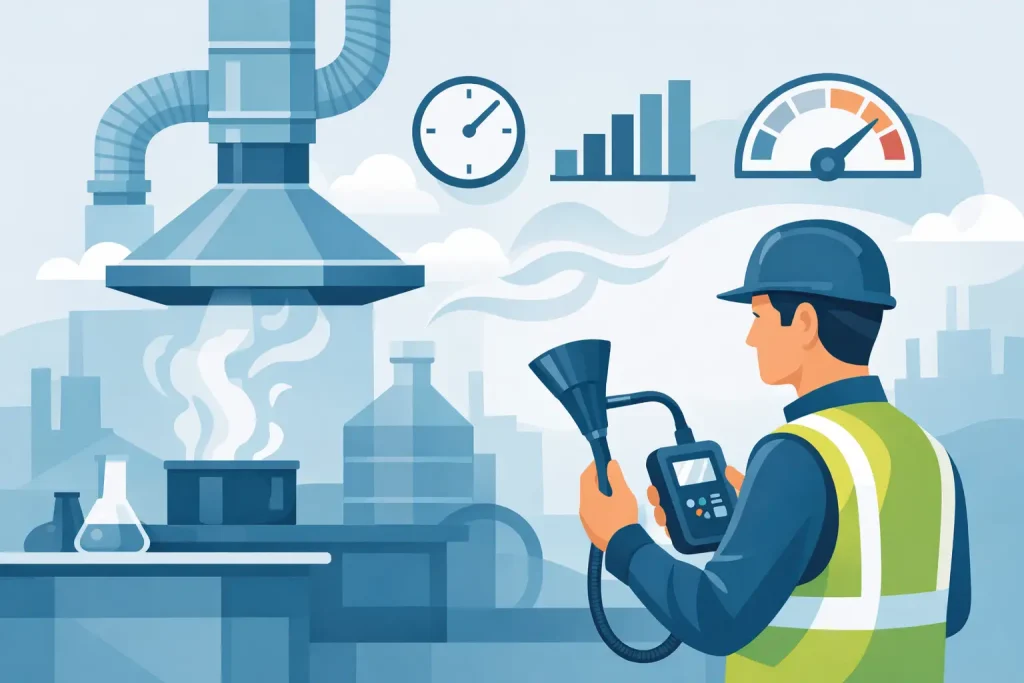
A local exhaust ventilation system can look fine from the outside while failing at the exact point where worker protection matters – at the hood, duct velocity, or filter section. That is why many plant teams ask the same question: what is DOSH LEV testing frequency, and how often does a system actually need formal examination and testing to stay compliant and effective?
For facilities handling dust, fumes, mist, vapor, or process emissions, LEV is not a one-time capital item. It is an exposure-control system that must continue performing as designed. If airflow drops, capture becomes unstable, or duct losses increase, the system may still be running while no longer controlling contaminants at the source. From a compliance and operations standpoint, that gap creates both occupational risk and documentation risk.
What is DOSH LEV testing frequency in practice?
In practical terms, DOSH LEV testing frequency refers to the required interval for formal examination and testing of local exhaust ventilation systems under occupational safety expectations in Malaysia. For most LEV systems, the commonly applied requirement is every 12 months, carried out by a qualified assessor or competent party in accordance with applicable DOSH expectations and recognized testing methods.
That annual interval is the starting point, not the full answer. Plant conditions matter. A system serving abrasive dust, sticky particulates, corrosive vapor, oil mist, welding fume, or high-temperature process exhaust may degrade faster than a lightly loaded extraction system in a cleaner environment. So while 12 months is the usual compliance benchmark, responsible operators do not treat it as a reason to wait a full year before checking performance.
The better way to think about LEV frequency is this: statutory testing is periodic, but performance assurance is continuous. The formal test gives you defensible compliance records. Routine inspections, servicing, and monitoring keep the system from drifting out of spec between test dates.
Why annual testing is only part of the control strategy
An LEV system is a chain of components, and each component can affect capture efficiency. Hoods must be positioned correctly. Ducts must maintain transport velocity. Dust collectors, scrubbers, or filtration sections must not be overloaded. Fans must deliver design airflow. Dampers and flexible connections must remain intact. If one section underperforms, the whole system may fail to control emissions at the source.
This is why formal annual testing has a clear purpose. It verifies whether the installed system is still achieving the intended engineering control performance. Typical examination and testing may include airflow measurements, static pressure readings, hood face or capture velocity checks, fan condition review, filter loading assessment, smoke testing where relevant, and confirmation that the system condition matches the original design intent or current operating requirement.
For industrial operators, the trade-off is straightforward. Waiting only for the annual test can reduce immediate service cost, but it increases the chance of hidden deterioration, operator complaints, failed internal audits, and expensive corrective work later. More frequent condition checks can seem like added maintenance overhead, yet they usually reduce shutdown risk and improve confidence during customer audits and regulatory review.
What can change the right LEV testing frequency?
Although annual formal testing is the common benchmark, the suitable maintenance and verification rhythm depends on the duty of the system. A grinding and polishing line generating fine combustible dust does not age the same way as a lab-scale extraction point. A welding fume extraction network in heavy production may face different airflow stability issues than a solvent vapor extraction line tied to packed tower scrubbing or activated carbon polishing.
Several factors usually push a facility toward tighter internal checking between formal tests. High contaminant loading is one. Process variability is another. System modifications, line expansions, hood relocations, and changes in raw material can all affect capture performance. The same applies when production teams increase throughput without rebalancing the extraction system.
Maintenance history matters as well. If a plant has repeated belt failures, filter blinding, duct leakage, fan vibration, or poor suction complaints, then annual statutory testing alone is not enough as a management approach. The system should be checked at shorter intervals, even if the formal examination remains on a 12-month cycle.
Signs your LEV system should be assessed before the next annual test
Experienced plant and EHS teams usually do not wait for the calendar when warning signs are visible. One common sign is reduced suction at the hood or pickup point. Another is visible dust escape, lingering fumes, or odor near the operator zone. Pressure drop changes across filters or scrubber sections can also indicate loading, blockage, or airflow imbalance.
Other warning signs are less obvious but equally important. Increased housekeeping dust, worker discomfort, corrosion around duct joints, unusual fan noise, and frequent need for manual adjustment often point to system drift. If a process was modified after commissioning, the original design air volume may no longer match actual emissions generation.
In those situations, an interim LEV assessment is not just good practice. It is often the fastest route to restoring control before noncompliance grows into an incident, internal finding, or production disruption.
What a compliant LEV testing program should include
A credible LEV program goes beyond booking an annual test. It should start with a clear asset register showing where each LEV system serves, what contaminants it controls, what the design duty is, and when the last test, service, and modification occurred. Without that baseline, frequency planning becomes reactive.
The next layer is routine inspection. Operators and maintenance personnel should know what normal performance looks like at the hood, fan, and collection equipment. This can be supported by simple check sheets, pressure gauges, airflow indicators, or an online monitoring layer where critical systems justify it. Plants with multiple extraction systems often benefit from trending suction and pressure data because deterioration becomes visible earlier.
Then comes formal examination and testing by a competent party. The output should not be a generic pass-fail document. It should show measured values, observed defects, nonconformities, and recommended corrective actions with enough technical detail to support maintenance planning and audit review.
Finally, corrective action must be closed properly. A failed or marginal test is not solved by filing the report. It is solved by repairing duct leakage, replacing worn filters, rebalancing airflow, restoring fan performance, correcting hood geometry, or upgrading undersized equipment where the process load has changed.
Where testing frequency connects to broader plant compliance
LEV testing does not sit in isolation. For many facilities, it intersects with air pollution control performance, worker exposure management, machine reliability, and customer-facing ESG expectations. A weak extraction system can affect indoor air quality, product cleanliness, combustible dust risk, and the performance of downstream equipment such as pulse-jet dust collectors, cyclones, scrubbers, and activated carbon systems.
That is why mature operators treat LEV as part of a lifecycle compliance framework. The system is designed for the process, commissioned against expected duty, monitored during operation, tested at required intervals, and serviced based on actual wear and loading. This approach produces stronger documentation and fewer surprises during audits.
For plants expanding lines or upgrading emission control systems, it also helps to work with a provider that understands both equipment engineering and compliance deliverables. Design intent, testing and commissioning, field auditing, servicing, and performance follow-up should connect. A gap between those functions often leads to systems that technically run but are difficult to defend from a compliance standpoint.
How to answer the question internally
If your team needs a clear internal answer to what is DOSH LEV testing frequency, the shortest defensible response is this: formal LEV examination and testing is generally expected every 12 months, but system condition, process severity, and operational changes may require more frequent checks and earlier intervention.
That wording matters because it prevents a common mistake. Many facilities hear “annual” and assume “once a year is enough.” In reality, annual testing is the regulatory checkpoint. Day-to-day compliance depends on whether the extraction system continues to capture, convey, and treat contaminants as designed throughout the year.
A plant that wants fewer compliance surprises usually builds that discipline into service planning. That may include quarterly condition review, preventive maintenance on fans and filters, post-modification reassessment, and trending of airflow or static pressure on higher-risk systems. For operations with demanding dust or fume loads, that level of control often costs less than repeated reactive repair.
Where this becomes especially valuable is in multi-line manufacturing environments. Once several LEV systems, dust collectors, and process exhaust points are running across shifts, missed servicing and undocumented performance drift become easy to overlook. A structured program, supported by competent testing and clear engineering records, keeps the plant closer to audit readiness and closer to actual worker protection.
For facilities that need both technical remediation and compliance support, a one-stop partner such as Master Jaya Group can be useful because the discussion does not stop at the test report. It can continue through diagnostics, system correction, servicing, and ongoing monitoring. That is often what turns annual testing from a paperwork exercise into a dependable control measure.
The helpful way to look at LEV frequency is not as a date on a certificate, but as a discipline of proving that your extraction system still does the job it was installed to do.